2026: The Year Search Became a Conversation
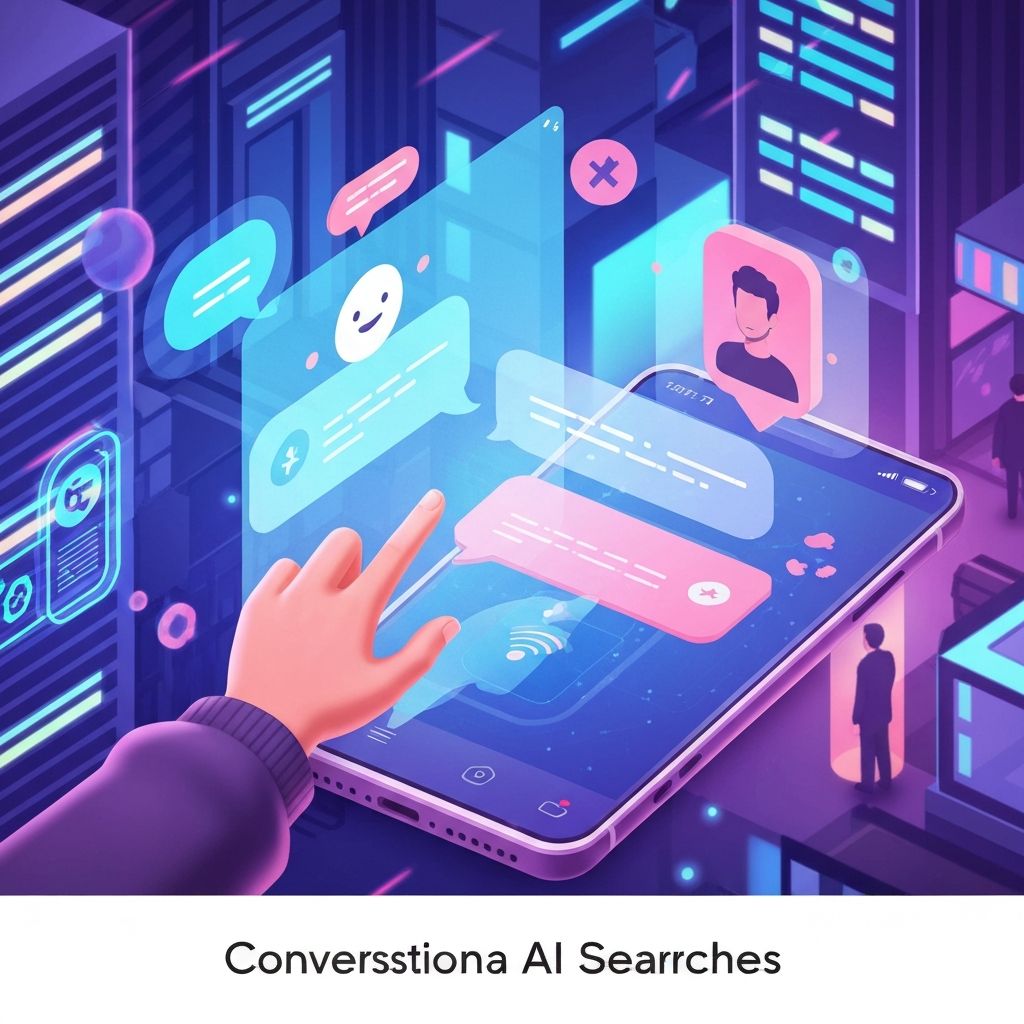
Search isn't about rankings anymore — it's about conversational AI understanding your brand and recommending it naturally.

Marveriq Team
AI Visibility Experts

The old search world is gone. What you knew as "search rankings" — blue links, scroll down the page — is evolving into something more fluid, interactive, and conversational.
Instead of searching first and clicking second, people now talk first and decide later. The year 2025 was a tipping point in how users find information, compare solutions, and make decisions — largely because AI-powered conversational engines are replacing classic search experiences.
This is not a future forecast — it's happening now.
1. The Slow Demise of "10 Blue Links" Search
For more than two decades, marketers focused on ranking first on search engine results pages (SERPs). That model was relatively stable: keywords, backlinks, metadata, and UX drove visibility.
But 2026 is becoming the year that model fundamentally breaks down.
Gartner predicts that traditional search engine volume will shrink by roughly 25% by 2026 as users increasingly turn to AI chatbots and virtual agents instead of classic search interfaces for answers.
Industry tools and studies broadly confirm this shift:
- AI-powered summaries and generative overviews are answering queries instantly — sometimes without any click to an external site. Elementor
- Conversational patterns (longer, more contextual queries) are replacing short keyword searches. ServiceEdge Marketing
- A McKinsey survey finds roughly half of consumers now intentionally use AI-powered search and discovery tools as their primary digital source for buying decisions, not traditional search engines. McKinsey & Company
In short: search is becoming a conversation, not a page of ranked links.
2. AI Assistants Are Becoming the First Interface People Use to "Search"
In 2025 and 2026, major platforms have doubled down on conversational modes:
- Google's AI Mode blends traditional search with natural language responses, providing an answer-first, conversational interface rather than a static list of links. ServiceEdge Marketing
- Generative systems like ChatGPT, Gemini, Copilot, and Perplexity act like interactive advisors — handling follow-ups, context, and nuance without requiring users to scroll through results. ServiceEdge Marketing
- Zero-click interactions — where the answer is delivered immediately — are now common enough that traditional click-through metrics no longer capture true visibility. ServiceEdge Marketing
Users increasingly expect an expert-like conversation with their search tools, not a menu of links.
This UX shift naturally changes how people discover, evaluate, and choose brands, products, and solutions.
3. Discovery, Decisions & Conversions Are All Changing
Classic search funnels — impression → click → landing page → conversion — were linear.
Conversational search collapses these steps:
Ask → Understand → Recommend → Decide
In many scenarios, AI tools now pre-summarize findings, compare options, and surface conclusions, all before a visitor ever lands on a website. This has three big consequences for brands:
- Visibility Without Traffic: AI summaries may include your brand's insights, yet the user never clicks your page. Traditional metrics fail to capture this visibility. Elementor
- First-Touch Influence Happens Earlier: When conversational AI delivers a recommendation, it shapes perception before users ever see search results. McKinsey & Company
- Intent Is Expressed in Natural Language: Users no longer type short keyword phrases — they ask full questions like "What's the best tool for managing remote teams in 2026?" or "Which bank offers the most transparent business loan terms?" Each of these demands deeper understanding — something AI conversational systems excel at. ServiceEdge Marketing
This is a higher-context, meaning-oriented mode of discovery that traditional search was never designed to handle.
4. What Marketers Must Understand: The Rules of Search Have Changed
Conventional SEO isn't dead — it's foundational. But it's now just the first layer of a broader visibility stack.
What matters now:
- A — Conversational Query Optimization: Your content must answer questions naturally — in real language, directly, and clearly — because AI assistants mirror how humans ask questions.
- B — Citation & Trust Signals: AI draws on third-party authority: credible sources, expert articles, data repositories and reviewed material. Being cited inside the answer — not just ranking on a page — matters.
- C — Structured, AI-Readable Content: Schema, FAQs, clear entity relationships, and well-signposted content help AI understand and use your knowledge.
- D — Brand Presence Across Conversational Platforms: Knowing where and how your brand gets mentioned in ChatGPT, Gemini, Perplexity or other engines becomes as important as traditional rankings.
In this world, visibility is no longer about clicks — it's about being referenced.
5. The New Competitive Landscape Is Conversational
If 10 years ago, the brand with the best SEO strategy won the search funnel, in 2026, brands that master conversational visibility and answer relevance will win AI-mediated discovery. McKinsey & Company
Here's how the shift plays out:
- Short queries → conversational questions — users expect context and nuance.
- Clicks → citations — AI includes answers with brief source attributions instead of deep link lists.
- Keyword focus → intent focus — relevance is judged by how well you satisfy user intent in conversation.
- Traffic → trust — being chosen by an AI assistant signals trust, intent and relevance before the click.
This changes not just marketing tactics, but strategic priorities — from traffic growth to citational authority. ServiceEdge Marketing
6. What You Should Do — Now, Before It's Too Late
- Audit for Conversational Presence: Test the questions your customers ask — in full-sentence, natural language — across major AI engines. Capture where your brand appears in AI answers, not just search results.
- Redesign Content for Conversational Consumption: Build concise, direct, well-structured responses to likely user questions. Prioritize factual clarity and relevance over keyword density.
- Earn Third-Party Credibility: AI systems draw heavily on authoritative, trusted sources — reviews, expert lists, industry research — so reinforce your brand with credible external citations.
- Track Visibility Inside AI Responses: Traditional analytics won't capture this. You need tools that surface AI recommendation patterns — and track how often your brand is chosen as the canonical answer.
- Benchmark and Outpace Competitors: In a conversational world, what matters isn't just presence — it's relative presence: how often your brand appears versus competitors in AI answers.
7. The Future Is Conversational — And It's Happening Now
2026 isn't "the year in the future" anymore — it's happening right now. AI-first search is shifting influence away from classic rankings and toward interaction quality, clarity, contextual relevance, and trust.
Traditional SEO laid the foundation; conversational search will define the next decade of brand discovery.
Generative AI isn't just another tool — it is the medium through which future customers learn, compare, and decide. And for brands that ignore this shift, it won't just be harder to compete — it will be nearly impossible to be seen where users are starting their journeys.
8. Ready to Own the Conversation, Not Just a Results Page?
Search in 2026 isn't about rankings... it's about conversation, context, and trust. If your visibility strategy still stops at traditional metrics like clicks and page ranks, your brand is invisible where today's decisions really begin — in generative AI answers.
Nearly half of all users now prefer AI-powered search for discovery and decision-making — meaning presence in conversational answers is now a strategic advantage. McKinsey & Company
Marveriq.comtransforms visibility into authority by showing you exactly where your brand appears in AI answers, where competitors are dominating discovery, and what you need to fix first to win.
With Marveriq you can:
- See exactly where AI engines mention — or ignore — your brand
- Track citation and recommendation presence across ChatGPT, Google AI summaries and Gemini, Perplexity, Meta AI and others
- Uncover semantic gaps and structured data issues that cost visibility
- Benchmark your conversational presence vs. competitors
- Prioritize actions that actually move AI recommendation metrics
Get meaningful insight in minutes — not months.
Start a 7-day free trial and see your brand through the lens of AI discovery — no lock-in, cancel anytime.
Take control of your brand visibility in 2026 and beyond.
Because in the new world of search, being positively cited in AI answer engines means business performance.
Ready to See Who's Winning AI Visibility?
Take our Free 5-minute GEO Maturity Assessment to discover how you stack up against competitors in AI answers — and get a personalized action plan.
Ready to Dominate AI Search?
Start tracking your brand's AI visibility today with Marveriq's comprehensive platform.
Start Free Trial