From SEO to GEO: Why Ranking #1 on Google Isn't Enough in 2026
Discover why traditional SEO rankings are becoming less relevant as AI-powered search transforms how consumers find and choose brands.

Marveriq Team
AI Visibility Experts

For nearly two decades, ranking #1 on Google was the single most valuable achievement in digital marketing. Brands invested millions into organic search dominance — and for a long time, it worked.
But in 2026, SEO supremacy no longer guarantees visibility, influence, or revenue.
Why?
Because the world has shifted from search engines to answer engines — AI assistants like ChatGPT, Google Gemini, Claude, Copilot, Perplexity, and dozens more. Your customers aren't browsing through pages of search results; they're asking AI directly for what they need.
And here's the uncomfortable truth:
If your brand doesn't appear in AI-generated answers, you're not even in the consideration set — regardless of your Google ranking.
The SEO era isn't over. But a new discipline now determines who gets recommended, discovered, and chosen: GEO — Generative Engine Optimization.
This article explains why your 2026 roadmap must expand from SEO to GEO.
1. Zero-Click Search Has Redefined Visibility
The first signal that SEO is no longer enough is something traditional search marketers have been worried about for years: the rise of zero-click searches.
Studies show:
- Over 57% of Google searches end without a click SparkToro, 2022.
- Google is increasingly answering queries on-page, reducing organic traffic for brands across categories.
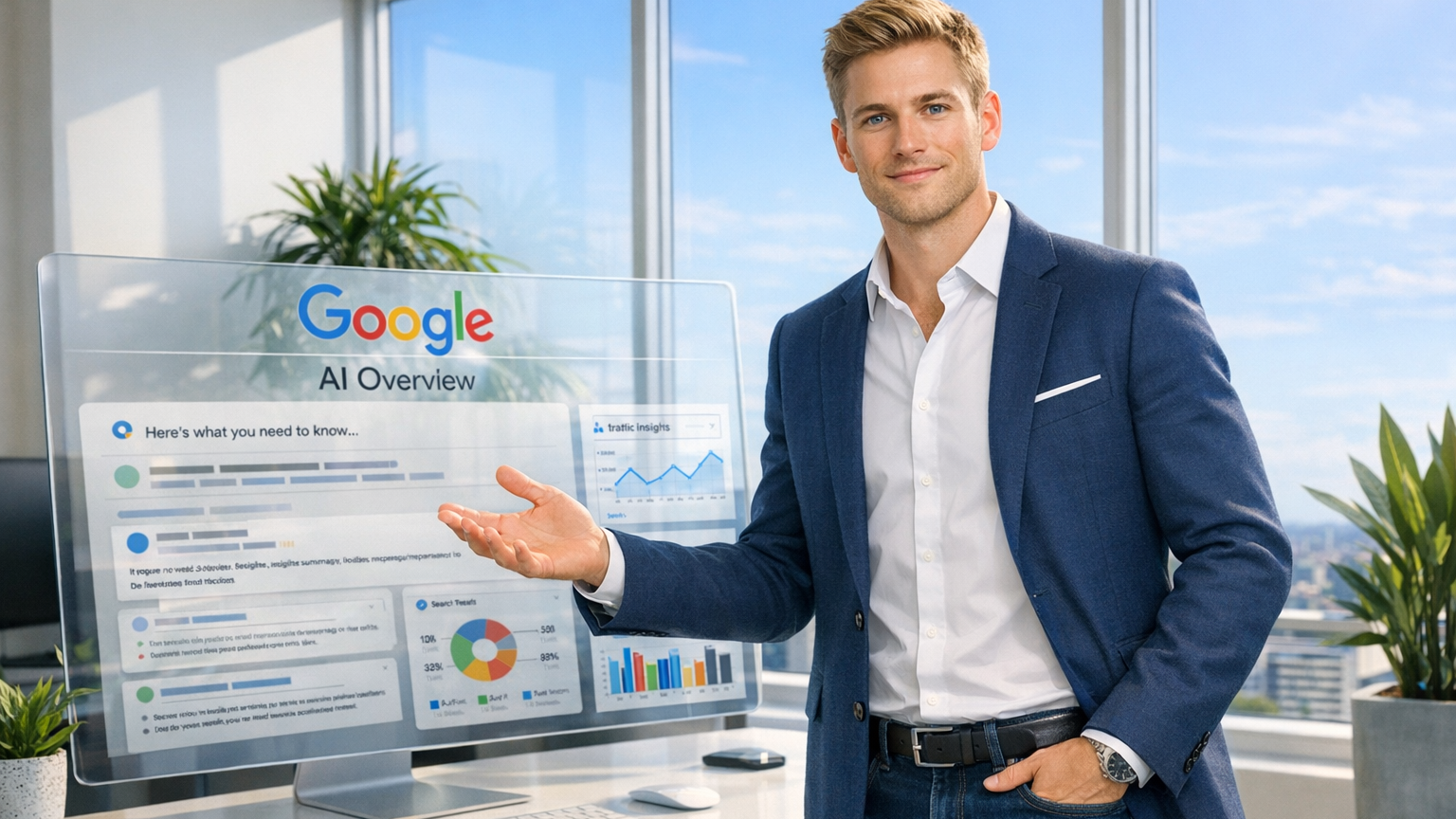
- AI-generated summaries in search further suppress clicks as users accept Google's answer instead of exploring links.
And this is accelerating.
Gartner predicts that by 2026, around 25% of all search traffic will be displaced as users switch from search engines to AI chat interfaces.
This means:
- Your organic ranking may remain high.
- But your share of actual attention may be collapsing.
The click-based model of SEO does not reflect where buyer attention now flows.
2. AI Assistants Have Become the First Stop for Decision-Making
AI isn't just an alternative search tool — it's becoming the default interface for consumer research.
Recent research shows:
- 80% of B2B tech buyers now use generative AI tools as often as or more often than traditional search when evaluating vendors McKinsey, 2023.
- 62% of global consumers say they trust AI assistants to help them decide what products to buy Yext Consumer Search Insights, 2025.
- For retail/eCommerce, nearly 60% of shoppers now use AI assistants for product recommendations Retail Dive, 2024.
When a user types:
- "Best small business accounting software"
- "Best running shoes in 2026"
- "Top hotels in Singapore for business travel"
- "Most reliable NBN plans in Australia"
They increasingly ask AI, not Google and other internet search engines.
If AI does not mention your brand — even if you rank #1 on Google and other intenet search engines — the buyer journey may never reach you.
3. AI Recommendations Drive Higher-Intent Traffic
Here's the surprising twist:
When buyers do reach your website from an AI recommendation, that traffic is significantly more qualified.
Studies demonstrate:
- AI-referred traffic converts at 5–23× higher rates than traditional organic visits VibeEngine AI Visibility Study, 2023.
- ChatGPT-referred traffic showed conversion rates as high as 15.9% vs. 1.76% for Google organic — nearly a 9× uplift WriterZen AI Behaviour Report, 2023.
- Increased AI visibility correlates with a 1:1 uplift in revenue, meaning 1% gain in AI visibility often produces ~1% revenue increase within 12 months Forbes, 2025.
This means:
Being recommended by AI engines is commercially more valuable than ranking on internet search engines.
SEO brings volume.
GEO brings qualified intent.
4. SEO Optimizes for Rankings — GEO Optimizes for Recommendations
SEO is built around technical signals:
- Keywords
- Backlinks
- Meta tags
- Crawlability
GEO is built around:
- Citations in AI answers
- Sentiment in AI output
- Brand accuracy in LLM responses
- Topic/entity alignment
- Competitive share of recommendations
Research from WestCap highlights that LLMs depend heavily on clean, structured, factual statements to decide which brands to cite or recommend.
Meanwhile, Semji found:
- 74% of problem-solving searches generate AI answers, not SEO-ranked listings.
SEO tells internet search engines your content exists.
GEO ensures AI engines understand, trust, and recommend your brand.
5. Competitors May Already Be Winning in AI Answers
Even if you own key SEO rankings, competitors may:
- Dominate AI recommendations
- Be positioned more positively
- Show stronger citations
- Have more structured content
- Provide cleaner factual signals AI engines prefer
A brand can be #1 on Google and other internet search engines but absent across ChatGPT, Gemini, Claude — leaving millions of high-intent interactions undefended.
This is now a material competitive risk.
6. The New KPI: AI Visibility, Not Search Ranking
Marketing teams are already reinventing their dashboards.
Old KPI: Search Ranking → New KPI: AI Answer Visibility
Old KPI: Organic Traffic → New KPI: AI Recommendation Share
Old KPI: Click-through Rate → New KPI: Sentiment and trust within AI answers
AI is shaping brand perceptions before the click even happens.
Traditional SEO cannot measure or influence this.
7. What Marketers Must Do Next
- Audit Your Brand Across AI Engines
See where you appear, how you're described, and who else is being recommended. - Fix Your Brand Facts
AI models penalize outdated or unclear brand data. - Shift from Keywords → Topics & Entities
LLMs respond to context, not keyword density. - Improve Content Structure for AI Ingestion
Concise, factual, schema-aligned content wins. - Monitor Competitor AI Presence
If an AI assistant prefers your competitor, you must know why. - Use GEO Platforms to Track and Optimize Performance
This includes visibility monitoring, sentiment scoring, and recommendation insights.
Conclusion: The SEO Era Isn't Over — But GEO Is the Next Frontier
SEO still matters.
But it is no longer the full story.
AI assistants have become:
- The first touchpoint
- The trust gateway
- The recommendation engine
- The comparison tool
- The shortcut to decision-making
If you don't appear in those AI answers, you're invisible where it counts.
GEO isn't optional. It's the new foundation of digital visibility.
The brands that embrace it now will own the next decade of growth.
Ready to See Who's Winning AI Visibility?
Take our Free 5-minute GEO Maturity Assessment to discover how you stack up against competitors in AI answers — and get a personalized action plan.
Ready to Dominate AI Search?
Start tracking your brand's AI visibility today with Marveriq's comprehensive platform.
Start Free Trial